Glass Skin Supplements: What Actually Works From the Inside
Search for glass skin supplements and you get hundreds of bottles that all say the same four words: radiance, glow, beauty, within. Almost none of them tell you what is actually inside, in what amount, and why that amount would matter.
This is a category report, not a product ad. We read full labels, name the sources behind each nutrient, and check the seller's own checkout page for the real price. Here is what we found about what works from the inside, and what the label has to show before a bottle is worth your money.
No supplement creates glass skin on its own. What an oral formula can do is close nutrient gaps that show up in skin, hair and nails. The nutrients with the most published research behind them are the B-complex group, especially biotin. The label has to show the full active list with amounts, the count per bottle, the daily serving, and where it is made.
What is glass skin, exactly?
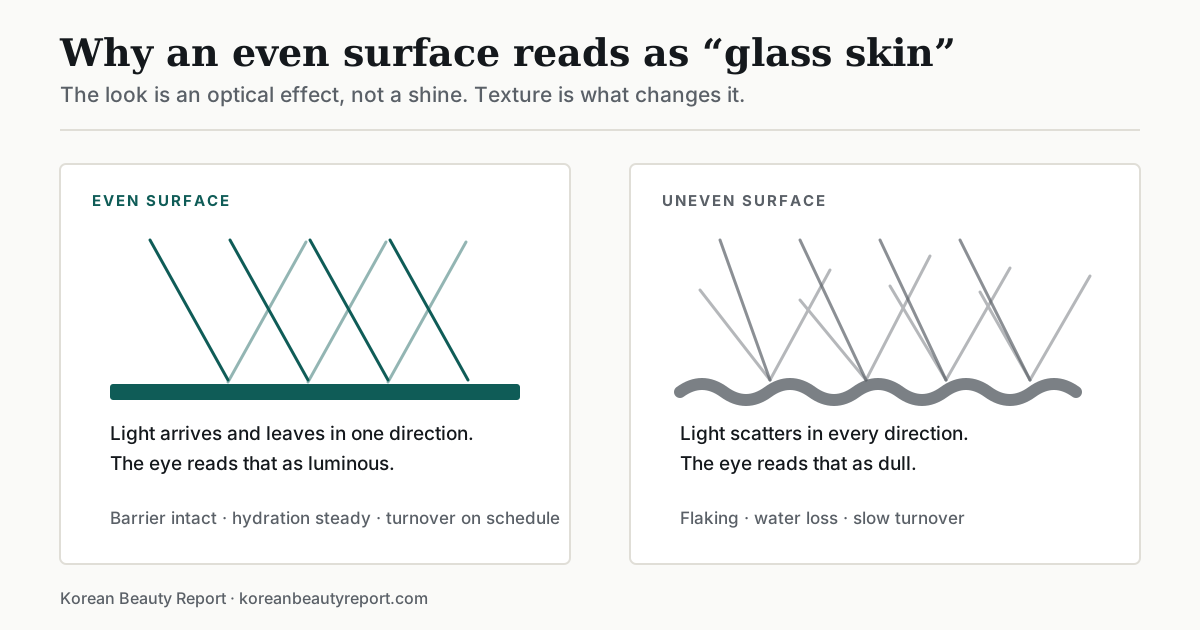
The term comes from Korean: yuri pibu, literally glass skin. It describes a complexion so even and so well hydrated that it reflects light almost like a pane of glass. It is not about looking wet, and it is not about shine. Oily skin reflects light too, and nobody calls that glass skin.
The difference is uniformity. A smooth, even surface bounces light back in one direction, which the eye reads as luminous. A surface with rough patches, flaking or uneven tone scatters that same light in every direction, which the eye reads as dull. That is the entire optical trick, and it explains why the goal is texture rather than glow.
The definition has shifted lately. The version circulating in 2026 puts far more weight on barrier health and long-term resilience than on the high-gloss finish that went viral years ago. That shift matters for supplements, because barrier function is one of the few skin properties that nutrition genuinely touches.
Can a supplement really give you glass skin?
Honest answer: not by itself, and any bottle that says otherwise is selling you something it cannot deliver.
Skin surface is shaped by things a capsule never reaches. Sun exposure, sleep, how much water your skin loses through the day, what you put on it and how often you exfoliate all matter more than any pill. A supplement does not replace a topical routine and it does not replace sunscreen.
What an oral formula can do is narrower and still worth something: close nutrient gaps. Skin, hair and nails are among the first tissues to show when the body is running short on certain micronutrients, because they are fast-turnover tissues with high demand. That is the honest mechanism, and it is the one worth paying for.
It also sets a fair expectation. If your intake is already comfortable, adding more of a water-soluble vitamin mostly means a more expensive trip to the bathroom. If it is not, the change can be visible. Which is exactly what the research says.
What does skin actually need to look that way?
Four things, in rough order of how much they matter:
- An intact barrier. The outermost layer holds water in and irritants out. When it is compromised, skin loses water faster than it can replace it, and texture goes first.
- Steady hydration. Not a one-off drink of water, but the skin's ability to hold onto moisture across the day.
- Normal cell turnover. Old cells lifting off on schedule is what keeps the surface even. Slow turnover is what people feel as rough or flaky.
- Protection from UV. The single largest driver of uneven tone over time, and the one no supplement touches.
Of those four, nutrition has a real, documented role in the first three. It has almost none in the fourth. That is the honest split, and it is the frame we use for the rest of this report.
Which nutrients actually show up in the research?
The B-complex group is where the published evidence sits for skin, hair and nails. These are cofactors, which means they are the parts enzymes need in order to run reactions. When one is missing, the reactions slow down, and fast-turnover tissues notice first.
Biotin, also called vitamin B7
Biotin works as a coenzyme for the carboxylase enzymes, which sit in the middle of how the body handles fats and amino acids. The National Institutes of Health Office of Dietary Supplements describes this role in its biotin fact sheet.
The important nuance is who it helps. A 2017 review by Patel, Swink and Castelo-Soccio, published in Skin Appendage Disorders and indexed in PubMed under 28879195, looked at the published cases of biotin use for hair and nails. The visible improvements clustered in people who had an underlying deficiency. In people who were not short on biotin, the supporting evidence is thin.
Read plainly, that is not bad news. It is a test you can apply to yourself: if your intake is poor, or something is depleting it, there is a real mechanism for improvement. If not, temper the expectation.
Vitamin B12
B12 is required for DNA synthesis and for normal red blood cell formation, which is how oxygen reaches tissue in the first place. The NIH Office of Dietary Supplements covers this in its B12 fact sheet.
Two groups run short more often than average: people eating little or no animal food, since B12 occurs naturally almost only in animal products, and people whose absorption has dropped, which becomes more common with age. On a label, check the form. Methylcobalamin is a form the body uses directly.
Vitamin B6
B6 is involved in well over a hundred enzyme reactions, most of them in protein metabolism. Since skin structure is protein, that connection is not decorative. The NIH Office of Dietary Supplements documents the role in its B6 fact sheet. On labels it usually appears as pyridoxine hydrochloride.
Folate
Folate is needed to make DNA and to divide cells. Skin renews itself constantly, so tissues that divide quickly depend on adequate folate. The NIH Office of Dietary Supplements sets out the mechanism in its folate fact sheet.
Pantothenic acid, also called vitamin B5
B5 is the precursor of coenzyme A, which the body uses to build and break down fats. Skin barrier lipids are part of that fat economy, which is the link back to barrier function. The NIH Office of Dietary Supplements covers it in its pantothenic acid fact sheet. On labels it often appears as d-calcium pantothenate.
Why do so many Korean gelatin gummies contain no gelatin?
This is the strangest thing we found in the category, and it is worth knowing before you spend anything.
A large share of the products sold as korean gelatin gummies contain no gelatin at all. They are set with pectin, which comes from fruit. That is not a scandal in itself. Pectin makes a perfectly good gummy and it happens to be suitable for people who avoid animal products.
The problem is the word doing the selling. If gelatin is what you think you are buying, and the bottle is set with pectin, the marketing promise and the jar disagree.
The same applies to collagen, which shows up all over this category. Collagen taken by mouth does not travel to your face as collagen. Digestion breaks it into amino acids and peptides, which the body then uses wherever it decides to use them. There is no delivery address on a protein.
Once you accept both of those, the question changes in a useful way. If the jelly is not the active ingredient and collagen is not being routed to your skin, then what separates a serious formula from an expensive candy is what else is in the bottle, and whether the label shows it. That is the whole game, and it is why the next section exists.
How do you read a beauty supplement label?
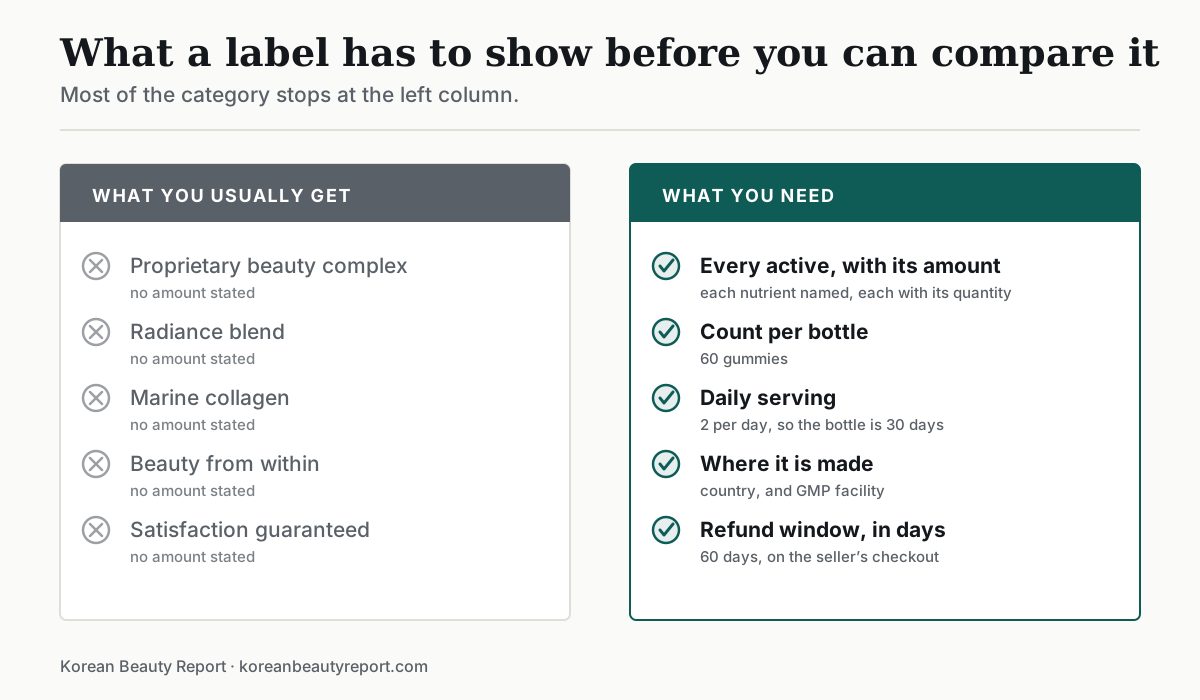
Five checks, in the order we run them. A bottle that fails the first two is not worth continuing with.
- The full active list, with amounts. Not "proprietary beauty complex". Named nutrients, each with a quantity. Without amounts you cannot compare two products at all, and that is usually the point of leaving them out.
- Count per bottle and daily serving. These two numbers together give you the real cost per day, which is the only price that means anything. A cheaper bottle with a bigger daily dose can easily be the more expensive product.
- Where it is made. Manufacturing country, and ideally whether the facility follows Good Manufacturing Practice. "Korean technology" printed on a label is a branding statement about the formula's origin, not a statement about where the jar was filled. Both can be true at once, and a straight label says which is which.
- The form of each vitamin. Methylcobalamin for B12, pyridoxine hydrochloride for B6, d-calcium pantothenate for B5. A label that names forms is a label written by someone who expects to be read carefully.
- The refund window, in days. Stated in days, on the seller's own page, and with the conditions visible. "Satisfaction guaranteed" with no number attached is not a guarantee, it is a mood.
Run those five against any bottle in this category and most of them fall away immediately. We went looking for one that passes all five.
Which product publishes its whole label?
Of the products we checked in the Korean beauty gummy category, Gelagen is the one that puts the entire formula on the outside of the jar instead of hiding it behind a blend name.
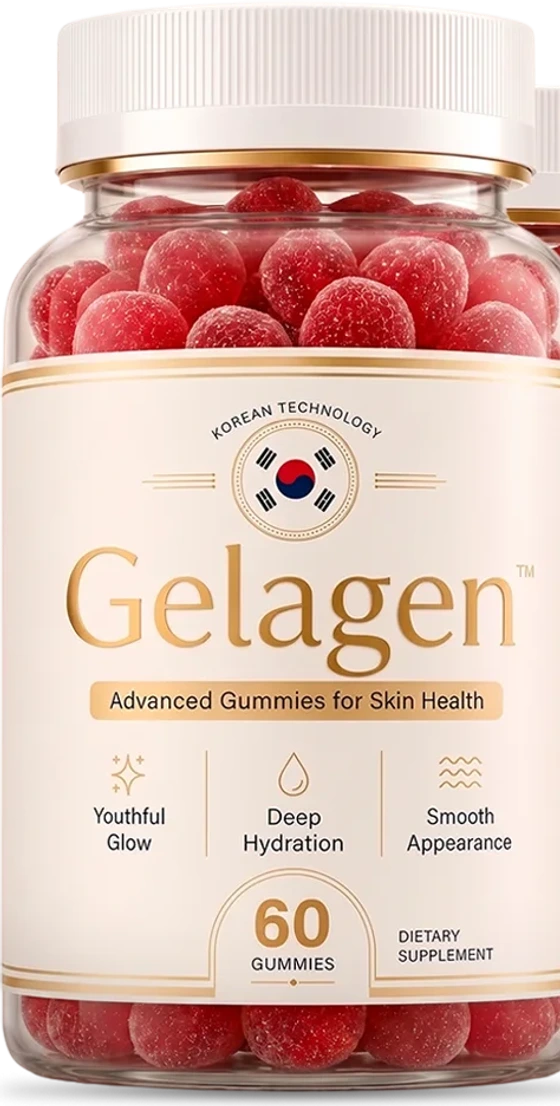
Gelagen Korean Beauty Gummies
- Five named B-complex nutrients, each with its amount printed on the label: biotin, B12 as methylcobalamin, B6 as pyridoxine hydrochloride, folate and pantothenic acid as d-calcium pantothenate
- 60 gummies per bottle, 2 per day, so a bottle is a 30-day supply and the cost per day is something you can actually calculate
- Pectin-set, not gelatin, and the seller says so rather than trading on the word
- Made in the United States, in a facility registered with the FDA and following Good Manufacturing Practice
- 60-day money-back window, stated in days on the seller's own checkout page
It is worth being precise about what that means. Passing those five checks says the seller is transparent and the formula is legible. It does not say the product will do anything specific to your face. Nobody can promise that, and the label is the only part we can verify on your behalf.
If you want the deeper breakdown of how this product compares with the rest of the category, including the other formats, that is in our report on Korean beauty supplements.
What should you skip?
Four patterns that came up often enough to name:
- Proprietary blends with no amounts. If the quantities are hidden, the comparison is impossible by design.
- Before-and-after photos as the main evidence. Lighting, angle and makeup account for more of those images than any ingredient does.
- Struck-through prices that never existed. A "was $179" on a product that has only ever sold near $49 is not a discount, it is a number invented to make the real price feel like a rescue.
- Star ratings with no volume behind them. Three reviews averaging five stars tells you nothing at all. We do not publish a score for this category yet, because there is not enough independent volume to support one.
- Glass skin is an optical effect produced by an even surface, not by shine. Texture is the target.
- No supplement produces it alone. What an oral formula can do is close nutrient gaps, and that is a narrower but real benefit.
- The B-complex group is where the research sits. Biotin has the most published material, and the visible improvements cluster in people who were running short.
- Most korean gelatin gummies contain no gelatin, and oral collagen does not travel to your face as collagen. The active ingredients are what matter.
- Five label checks decide it: full actives with amounts, count and serving, country of manufacture, vitamin forms, and a refund window stated in days.
Frequently asked questions
How long before a beauty supplement shows anything?
Skin turns over on a cycle measured in weeks, and hair and nails are slower still. Any ' product promising a visible change in days is describing something other than biology. Most refund windows in this category run 60 days, which is a reasonable period to judge by and also the reason to check that the window is stated in days before you buy.
Are gummies weaker than capsules?
Not automatically. Format affects how much fits in one serving, not whether the nutrient works. A gummy carries less material than a capsule, which is why the daily serving in this category is usually two rather than one. What matters is the amount you end up taking per day, which is why the count and serving numbers on the label are worth more than the format.
Do I need collagen for glass skin?
Collagen taken by mouth is broken down by digestion into amino acids and peptides before it reaches the bloodstream. It does not arrive at your face as collagen. That is why we judge products in this category on their named active nutrients and their amounts rather than on whether the word collagen appears on the front of the jar.
Is biotin safe to take every day?
Biotin is water-soluble and the NIH Office of Dietary Supplements has not set an upper intake level for it. One practical caution is worth knowing: biotin can interfere with certain laboratory blood tests, including some thyroid and cardiac panels. Tell whoever is drawing your blood that you take it. As with any supplement, check with a doctor or pharmacist first if you are pregnant, nursing or taking medication.
Does "Korean technology" mean the product is made in Korea?
Not necessarily, and the two claims are different. A formula can be developed on Korean formulation principles and manufactured somewhere else entirely. A straight label tells you both things separately: what tradition the formula comes from, and what country the jar was filled in. When only the first appears, ask for the second.
Why does this report not give a star rating?
Because the independent review volume in this category is too thin to support one. Our floor is at least 30 independent reports across two or more sources before we publish a score. Inventing a rating to fill the gap would make the page look more authoritative and be worth less. When the volume is there, the score goes up.
We read the full label, name every source in the text, and check the price on the seller's own checkout page rather than the landing page. We publish no star rating until a category clears 30 independent reports across two or more sources.