Korean Beauty Supplements: What Is Actually Inside Them
The korean beauty supplements shelf has grown faster than almost anything else in the category, and US sales of Korean beauty products reached the billions in early 2026. Growth that fast brings a lot of bottles that look serious and say very little.
We went through the labels format by format. This report covers what is genuinely inside each one, which claims do not survive contact with the ingredient panel, and the single comparison that separates a real formula from an expensive candy.
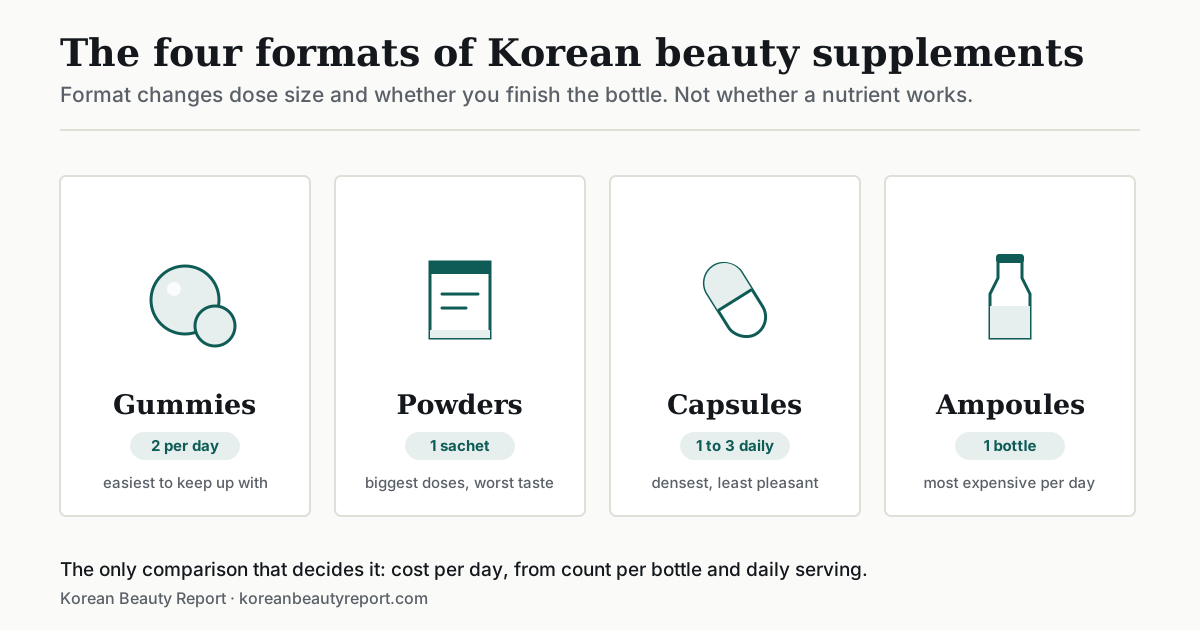
Korean beauty supplements come in four formats: gummies, powder sachets, capsules and drinkable ampoules. Format changes convenience and dose size, not whether a nutrient works. Most of the category leans on collagen, which digestion breaks down before it reaches skin. The bottles worth buying name every active with its amount.
What counts as a Korean beauty supplement?
Less than you would think, and that is the first thing to get straight.
The phrase covers three different situations that a label rarely separates. A product can be formulated in Korea and made there. It can be built on Korean formulation principles and manufactured elsewhere, often in the United States for the US market. Or it can be neither, and simply borrow the aesthetic because the category sells.
None of the first two is dishonest. Plenty of good products are designed on one continent and filled on another, and a US facility following Good Manufacturing Practice is a perfectly reasonable place for a jar to be filled. The problem is only when a label lets you assume one thing while a different thing is true.
So the practical move is to stop treating "Korean" as a quality grade and start treating it as a description that should come with details. A label that says where the formula comes from and where the product is made is telling you more than one that says neither.
What are the four formats, and does format matter?
| Format | How it is taken | What it is good at | The catch |
|---|---|---|---|
| Gummies | Usually 2 per day, chewed | Easy to keep up with daily; no water needed; the format people actually finish | Less material fits per piece, so check the daily serving, not the piece |
| Powder sachets | Mixed into water or a drink | Carries the largest doses of the four | Taste and texture drive the highest abandon rate in the category |
| Capsules | 1 to 3 per day with water | Highest dose per piece; no flavourings or sweeteners needed | Nothing pleasant about it, which is a real adherence problem over months |
| Drinkable ampoules | One small bottle per day | Premium presentation; popular in Korea itself | Most expensive per day by a wide margin, and heavy to ship |
Format does not decide whether a nutrient works. It decides how much fits in one serving and how likely you are to still be taking it in week eight. Both of those are real, and the second one is underrated: the best formula in the world does nothing sitting unopened in a drawer.
Which is the honest case for gummies. They carry less per piece, which is exactly why the daily serving in this format is normally two. The trade is convenience for dose density, and for a water-soluble B-complex taken daily, that trade is a reasonable one.
What is usually inside, and what is not?
Across the labels we read, four ingredients do most of the selling.
Collagen, which does the most work in the marketing
Collagen is on the front of more jars in this category than anything else. It is also the claim that survives the least scrutiny.
Collagen is a protein. Taken by mouth, it meets digestion, which breaks it into amino acids and short peptides before anything enters the bloodstream. Those fragments are then used wherever the body decides to use them. There is no mechanism that routes them to your face because the jar had a picture of a face on it.
That is why we do not weight collagen heavily when comparing two bottles, and why a product that leaves it out is not automatically the weaker one.
Gelatin, which often is not there at all
A large share of products sold as korean gelatin gummies are set with pectin, a fruit-derived gelling agent, and contain no gelatin whatsoever. Pectin is a fine choice and suits people avoiding animal products. The issue is the gap between the word on the front and the panel on the back.
We cover the gelatin question and the optical side of the glass skin look in more depth in our report on glass skin supplements.
Hyaluronic acid, which belongs somewhere else
Hyaluronic acid earned its reputation on the skin, where it holds water at the surface. Swallowed, it is a large molecule that meets the same digestive process as any other. The evidence for topical use is considerably stronger than the evidence for oral use, and a supplement leaning on it is borrowing credibility from a different product category.
The B-complex group, which is the part with the research
Biotin, B12, B6, folate and pantothenic acid are the nutrients in this category with the most published material behind them, documented in the fact sheets of the National Institutes of Health Office of Dietary Supplements. They work as cofactors, which is a modest and verifiable mechanism rather than a dramatic one.
The honest framing, which a 2017 review by Patel, Swink and Castelo-Soccio in Skin Appendage Disorders, indexed in PubMed as 28879195, supports for biotin: the visible improvements concentrate in people who were short on it to begin with.
How do you compare two bottles honestly?
One number does most of the work, and almost no seller shows it: cost per day.
You build it from two figures that any straight label has to carry. Take the count per bottle, divide by the daily serving, and you have how many days the bottle lasts. Divide the price by that, and you have what the product actually costs you per day.
| What you need | Where it is | Why it decides the comparison |
|---|---|---|
| Count per bottle | Front or side panel | Without it, "a bottle" is a meaningless unit |
| Daily serving | Supplement facts panel | Two per day halves the life of the bottle |
| Actives with amounts | Supplement facts panel | A blend with no amounts cannot be compared to anything |
| Real price | The seller's checkout, not the landing page | Tier pricing and shipping only resolve at checkout |
| Refund window in days | Seller's terms | A number, or it is not a guarantee |
That last row is worth repeating because it is where the category misleads most often. The headline percentage on a landing page frequently does not match what the cart charges. We check the checkout page every time, and the two numbers disagree more often than they agree.
Which one publishes everything?
Applying the whole list above, Gelagen was the product in this category that gave us every number without having to hunt for it.
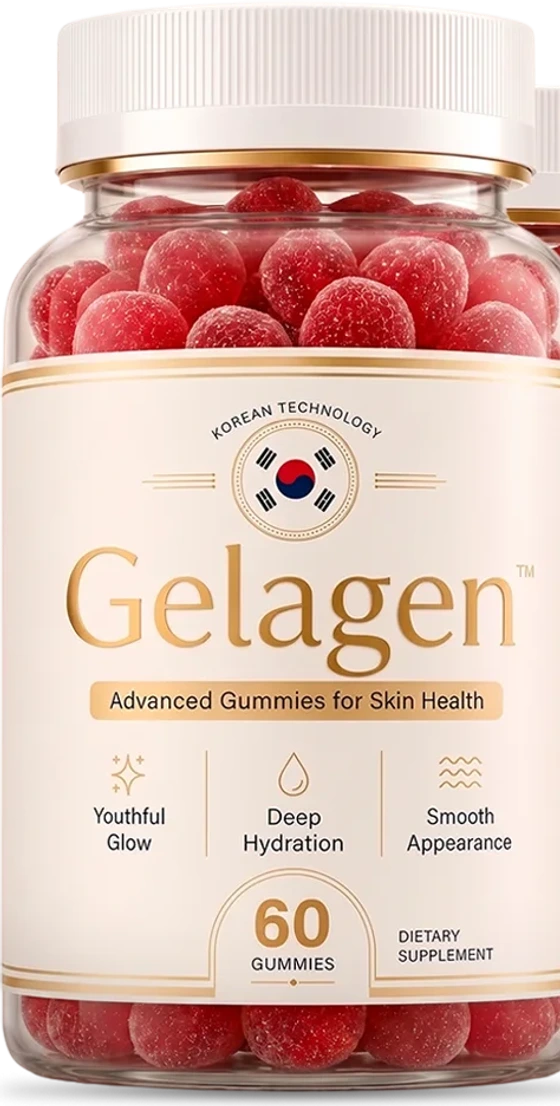
Gelagen Korean Beauty Gummies
- Every active named with its amount: biotin, B12 as methylcobalamin, B6 as pyridoxine hydrochloride, folate, and pantothenic acid as d-calcium pantothenate. No blend name standing in for the panel
- 60 per bottle at 2 per day gives you a clean 30 days, so the cost per day is a calculation you can finish
- Pectin-set rather than gelatin, stated plainly instead of leaning on the word
- Both origin facts declared: Korean formulation on the label, made in the United States in an FDA-registered, GMP facility
- 60-day refund window, in days, on the seller's own checkout
To be exact about what that verdict covers: it says the seller is transparent and the formula is legible enough to compare. It is not a statement about results, and no reading of a label could be.
What does the marketing get wrong most often?
- Inflated reference prices. A crossed-out number the product never sold for is not a saving.
- Bonus items with invented values. Digital guides listed at $67 or $77 are priced to inflate the perceived package, not by anything anyone paid.
- Ratings with no volume. A handful of reviews cannot produce a meaningful average, and we do not publish one for this category yet.
- Borrowed credibility. Ingredients with strong topical evidence quietly presented as though the same evidence applies when swallowed.
- Percentages that only exist on the landing page. Check the cart.
- "Korean" describes a formulation tradition, not a manufacturing address. A straight label tells you both, separately.
- Format affects dose size and whether you keep taking it, not whether a nutrient works.
- Collagen and hyaluronic acid carry the marketing; the B-complex group carries the published research.
- Cost per day is the only price comparison that means anything, and it needs the count and the daily serving to calculate.
- Verify the price at the seller's checkout, never on the landing page.
Frequently asked questions
Are Korean beauty supplements actually made in Korea?
Sometimes, and often not. Many are developed on Korean formulation principles and then manufactured in the market where they are sold, frequently in the United States for US buyers. Neither arrangement is a problem on its own. What matters is that the label says which is which, instead of letting the word Korean cover both questions at once.
Which format should I choose?
Choose the one you will still be taking in two months. Powders carry the biggest doses and have the highest abandon rate because of taste. Capsules are dense and unpleasant. Gummies carry less per piece, which is why the serving is usually two, and they are the format people finish. Ampoules cost the most per day by a clear margin.
Is it worth paying more for a collagen formula?
We would not pay a premium for it. Collagen taken by mouth is broken down by digestion into amino acids and peptides and is not delivered to your skin as collagen. A formula without it is not automatically weaker. Judge on the named actives and their amounts instead of on the word on the front of the jar.
How do I work out the real cost per day?
Divide the count per bottle by the daily serving to get how many days it lasts, then divide the price by that number. A bottle of 60 at two per day is 30 days. If two products differ in serving size, the cheaper-looking bottle is often the more expensive product once you finish the arithmetic.
Can I take these with other supplements?
Often yes, but it depends on what else you take, which is a question for a pharmacist rather than an article. One specific point is worth raising: biotin can interfere with certain laboratory blood tests, including some thyroid and cardiac panels, so mention it before bloodwork. Check with a doctor first if you are pregnant, nursing or taking medication.
Why does this site not score products out of five?
Our floor is 30 independent reports across at least two sources before we publish a rating, and this category does not yet clear it. A score built on a handful of reviews would look authoritative and carry no information. We would rather show the label checks and let you apply them.
We read the full label, name every source in the text, and check the price on the seller's own checkout page rather than the landing page. We publish no star rating until a category clears 30 independent reports across two or more sources.